
Talk Story
postcards from a whole grain baking workshop in Hawaii

Leeward Community College. Honolulu, Hawaii. July 12-15
Say it naturally: TAWK STOH-ree - two separate words said with a relaxed, conversational tone.
“Talk story” is Hawaiian Pidgin for “to chat”, “have a conversation”, or “catch up” with someone. It’s more than just small talk - “talk story” implies a relaxed, genuine exchange where you share experiences, reconnect, and build relationships. It embodies the Hawaiian spirit of connection and community through meaningful conversation.*
I met chef Dan Wetter at the Las Vegas Convention Center last year. A place which, ironically, hosts the world’s largest baking conference every three years.
On The Strip he heard me strip down commodity wheat farming. After my brief lecture on whole grains, on food systems, on how flour is an ingredient with flavor, not a tasteless product, he asked, “Want to come to Hawaii to teach this stuff?” After nine months of planning, I arrived at his classroom perched above Pearl Harbor to teach two workshops, two days each—sixteen students in both classes.
I’ve never had such a diverse group of students: veterans from all branches of our armed services; expats working in Hawaii (Brazilian, German, Filipino, Puerto Rican); native Hawaiians; spread across an age-group between teenagers and AARP members.
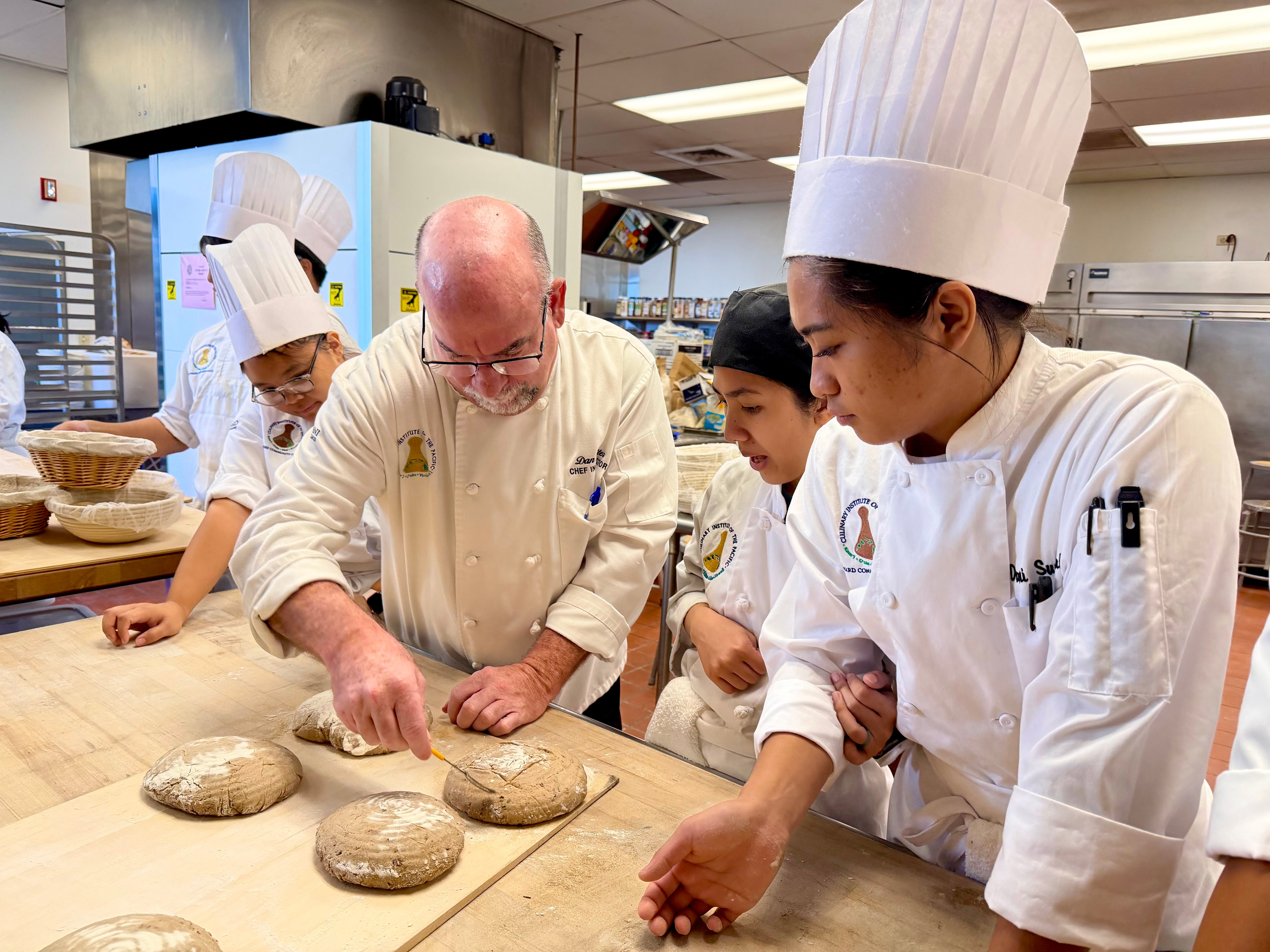
Designing the workshop with chef Dan and Hayley Matson-Mathes of the Hawaii Culinary Education Foundation was a challenge—how to teach sourdough, whole grain bread in a culture where wheat isn’t grown, where bread’s consumption isn’t ubiquitous? I spent months researching the Islands—their climate, culinary history, agriculture, ecology. I found out that 90% of the food now consumed in Hawaii is imported. Read that again.
Pre-contact Hawaiian farms supported a population of 1,000,000 people. But these days? If shipping were disrupted, Hawaii only has enough to feed itself for seven days. Seven days.
So what happens when there’s another Covid, a tsunami, a war? Not just that, but how does the importation of that much food affect the economy of a state with 1.43 million residents, who host about 10 million tourists a year? It depletes it in the same way that commodity grains deplete the soil of the Mainland.
The climate in Hawaii cannot support the farming of grains like wheat or barley. So with Chef Dan’s help, I scoured for locally-grown starches, reasoning that we could use gluten-strong wheat flour to scaffold the flavor of non-gluten flours grown on the Islands. The three locals flours we came up with were: ‘ulu (breadfruit), kiawe (mesquite), and poi (taro).
By pairing these with freshly milled whole grain flours from the Mainland, we could make bread that reflects the traditions and soil of the Islands. We could, as I try in all my classes, to empower students to make bread in their own image, to use baking as a form of self-expression by celebrating the ingredients which surround them. Tropical climates aren’t a problem for bread-baking—they’re an opportunity for beautiful new recipes.
Here was the menu we came up with:
Kiawe, Poi, and ‘Ulu Flour Baguettes & Epis
Sourdough Focaccia with Red Alaea Salt, Niupepela, Garlic, & Tomatoes
Northshore Dried Ginger, Big Island Vanilla, Lilikoi Syrup, & Roasted Macadamia Nut Couronne
Whole Grain Country Sourdough Bread with ‘Ulu & Poi Flours
Whole Grain Country Sourdough Bread with Northshore Honey, Big Island Cacao Nibs, & Big Island Mac Nut Butter
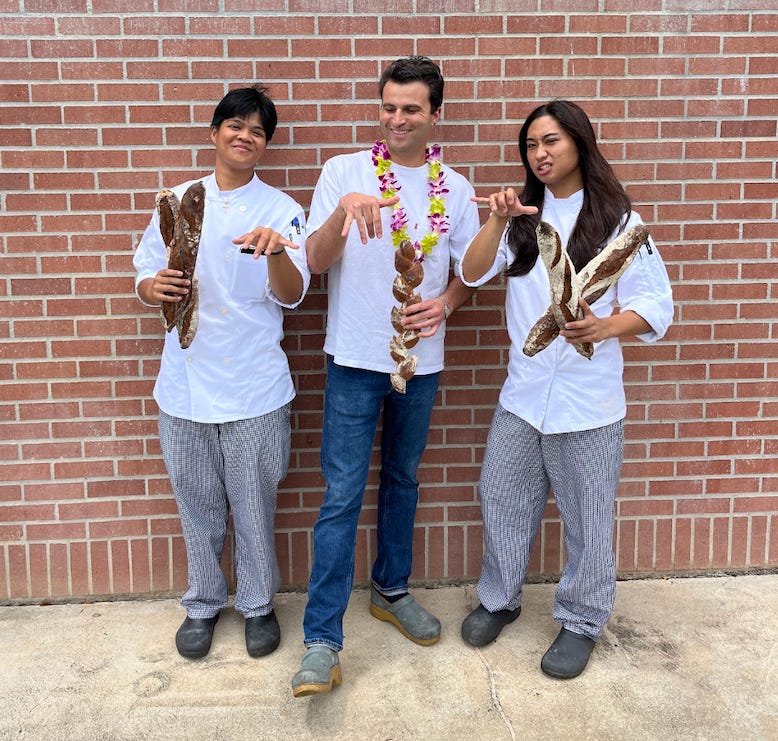
All the students were bubbly as a healthy sourdough starter—effervescent, kind, acidic. But it was the college kids who got me most. One of their first jokes was: “Hey chef, most of us are FOB (fresh off the boat), so take it slow.” For the next 48 hours I tried to keep a straight face—but they melted my heart from the first, these kids in pressed chef coats and tall toques who broke every kitchen motion with grins, laughter, and all the pidgin they taught me:
This bread is cherreh, chef.
Your name is white hammah, uncle Graison.
Rajah dat, chef.
That poke broke da mouth, yeah?
That’s a choke of loaves, chef.
Hana hou, uncle, this class was fun.
We brought you a lei, calabash.
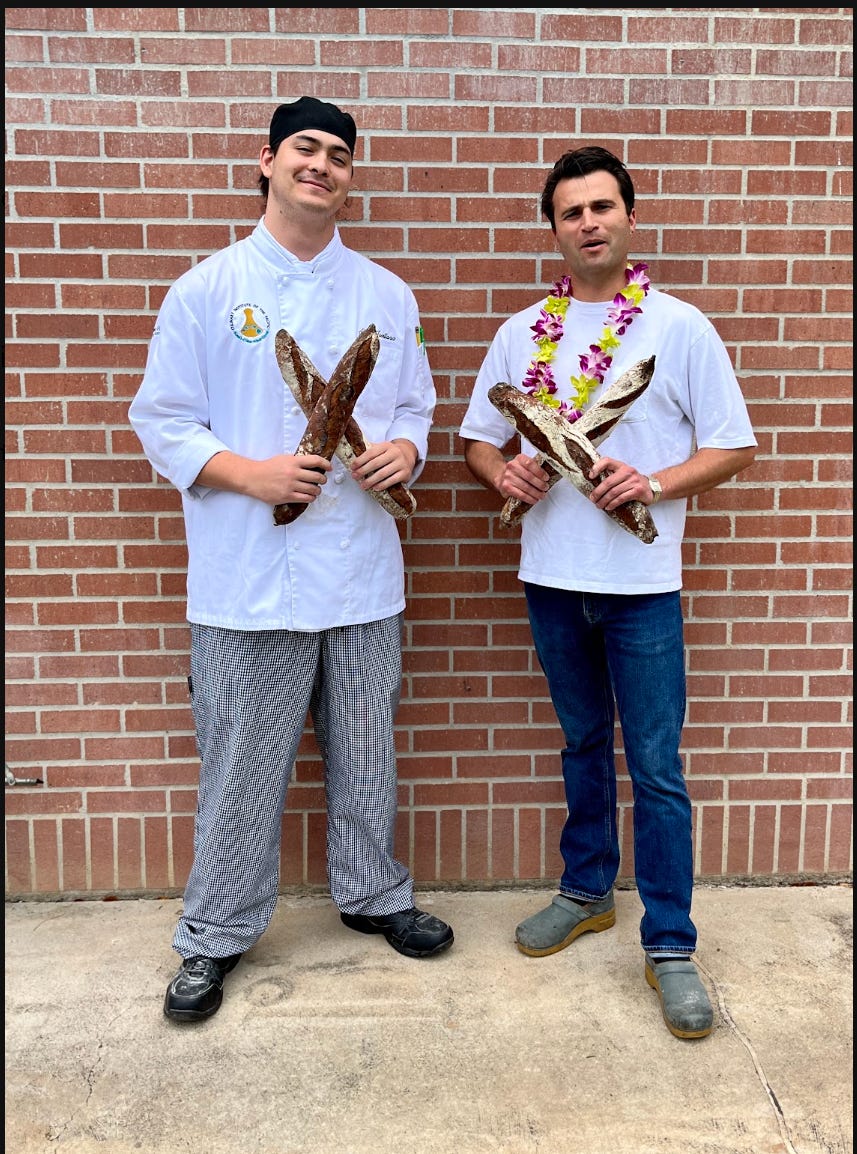
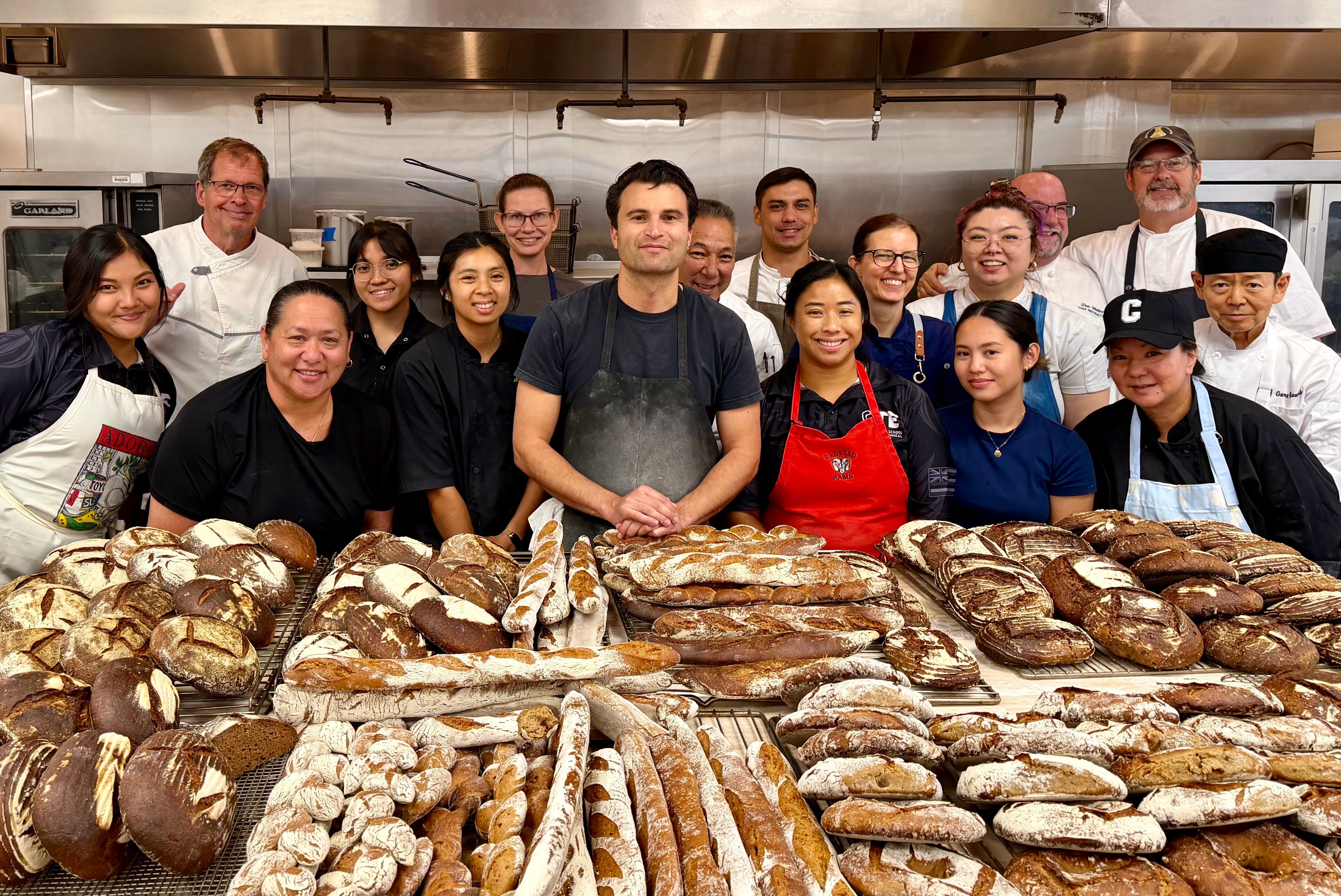
The bread we made was magical—from the ingredients, yes. But from the students, really. As we did our tasting, we talked story about the hundred loaves we made. I asked what kind of flavor, aroma, and texture they noticed—smokey, spicy, nutty, sour, grassy, tender, dense, light, chewy, sweet, bitter, moist. Delicious.
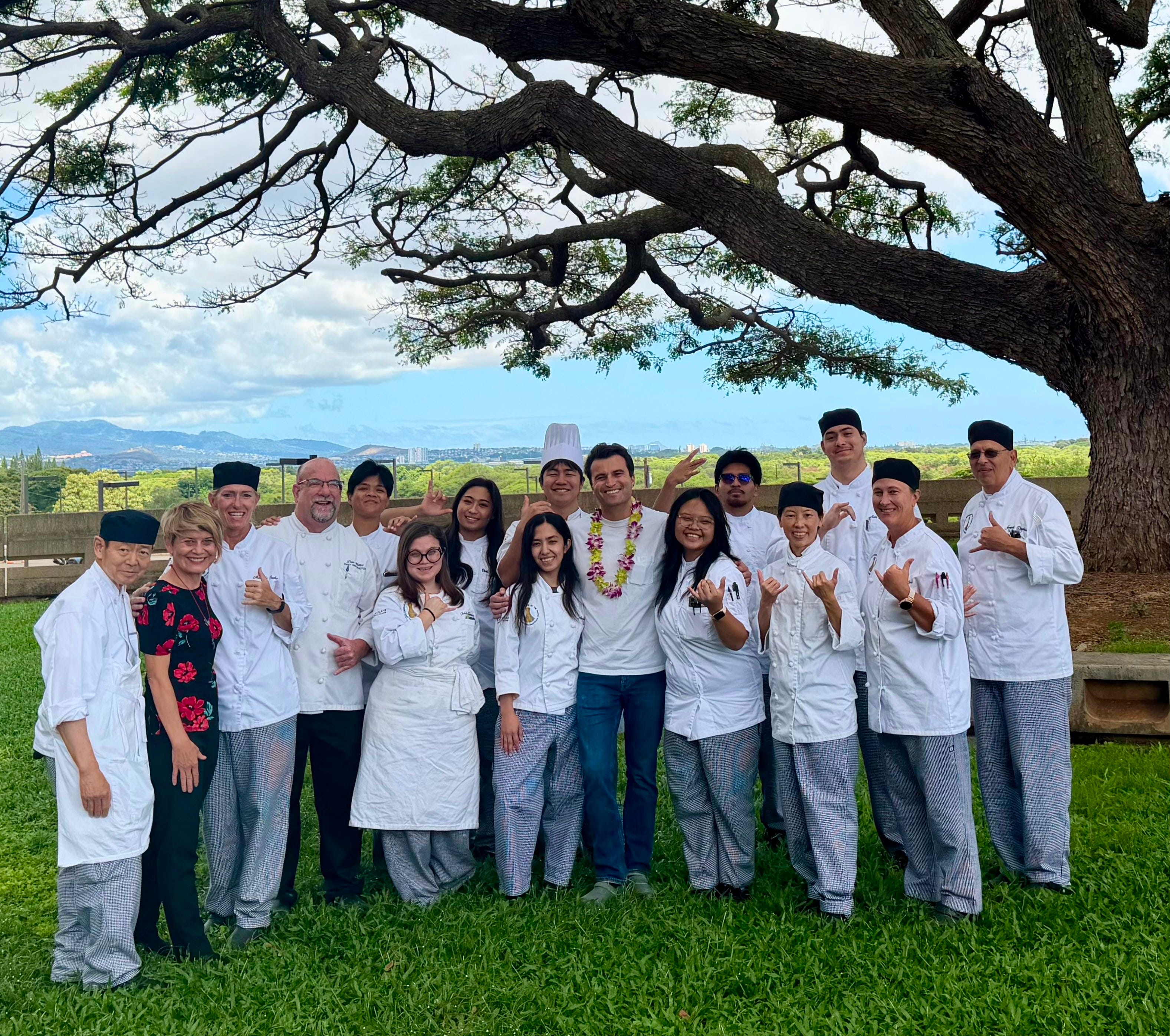
“Well, is it good? Do you like the bread you made with local ingredients?”
“Yes, chef.”
“Remember, bread is a mirror—it should reflect who you are, where you come from; most importantly, where you want to go.”
I’m always reminded, at the end of the two hundred odd classes I’ve taught at this point, that teaching is never about telling or showing someone how to do something. It’s about showing them how to look at the same thing differently. Bread, sure. But really, themselves.
So I asked each student what their dreams were—to open a bakery, to work at a restaurant, to … ? As we went around the room, listening to the answers of a question few of them had ever been asked, I knew I couldn’t cry in front of them. It’s not that any of the answers were sad—I choked up witnessing the transformative power of food, of bread. To hear young people say what flavor meant to their families, to their identities…most beautifully, to their futures.
*Definitions used from Chokepidgin.com
You will not remember me. We met at the Bread Lab in Skagit Valeey Washington years ago. You were just begining your journey. Over lunch we discussed your journey from California to NO. I am proud to support your efforts. Well done Graison!!
Hello Graison, Greetings from Maine. Very nice story about Hawaii. We wanted you to know that David made his first sour dough with your starter and it is TERRIFIC! Sliced and frozen nicely so we can enjoy it over time. Hope your time in Brooklyn was useful and that you’re doing well. Our Very Best, Jon